Making Product Personalisation ImmediateCopy link to this section
The Whitebox Counter from Envision Displays is a product that becomes far more persuasive once a customer can see their own brand on it. A standard product image can show the shape, materials, and overall design, but it cannot fully answer the question that matters most to the buyer:
What would this look like with my branding on it?
This Sales Interactive demonstration was created to answer that question instantly. Built in partnership with Envision Displays, the experience turned the Whitebox Counter into an interactive product showroom where users could inspect the model, scrub through the build process, toggle real-world dimensions, upload their own artwork, and see how the product promotes their design through illuminated backlighting.
The aim was not simply to make the product look impressive. It was to create a more useful sales tool. One that could reduce imagination, increase confidence, and help a customer move from interest to enquiry faster.
From Static Product Image to Interactive Sales ToolCopy link to this section
Product displays are often sold through context. Buyers want to understand how the product will appear at an exhibition, in a retail environment, at a trade stand, or as part of a branded activation. They are not only buying the object itself. They are buying how their brand will appear through it.
The interactive demo made that easier to understand.
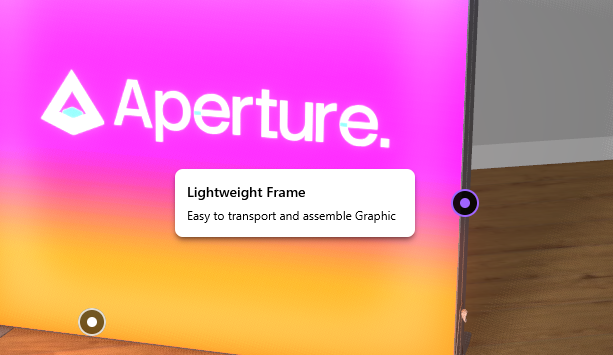
Users could orbit the Whitebox Counter in real time, view it from different angles, and interact with floating call-to-action points attached to the model. Each callout highlighted a specific feature, helping explain build quality, use cases, and product details without forcing the user through a long written description.
The experience also included toggleable dimensions, allowing users to view life-size measurements directly on the product. This helped move the demo beyond visual appeal and into practical buying confidence, giving customers a clearer understanding of scale, fit, and real-world use.
The product was no longer something to look at. It became something to inspect, test, and understand.
This is where interactive product showrooms become commercially valuable. They let customers engage at their own pace while giving sales teams a clearer, more visual way to explain the product.
Showing the Build, Not Just the Finished ProductCopy link to this section
A key part of the experience was the timeline feature, which allowed users to scrub through the build process of the Whitebox Counter.
This gave the demo a stronger technical and sales function. Instead of only showing the finished product, the experience revealed how the counter came together over time. Users could move through the construction sequence, understand the parts, and see the product as something engineered rather than simply presented.
That kind of visibility matters when build quality is part of the value proposition.
For a sales team, it creates a stronger explanation of why the product is worth considering. For the customer, it provides reassurance. They can see more than the surface finish. They can understand the structure, assembly, and thought behind the product.
The timeline turned product construction into part of the sales story.
It helped make the counter feel more tangible, more transparent, and more premium.
Uploading Artwork in Real TimeCopy link to this section
The most important feature was personalisation.
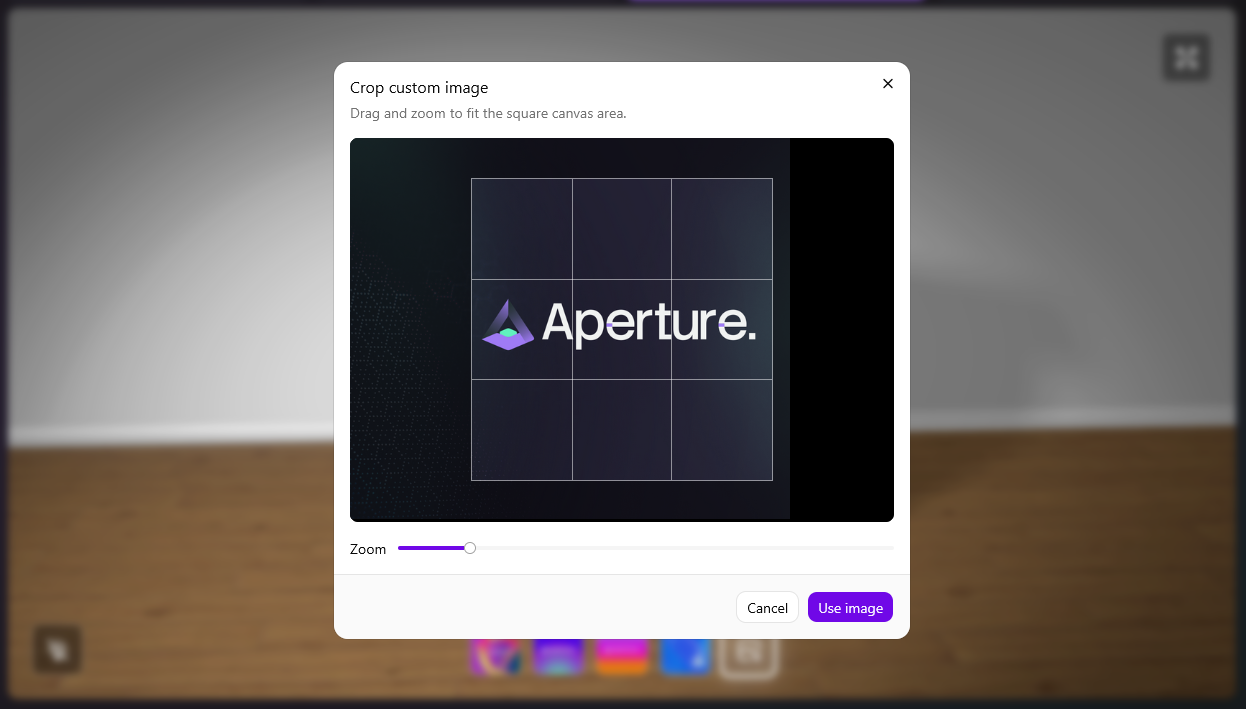
Because Envision Displays’ customers can apply their own artwork, logo, or design to the Whitebox Counter, the demo needed to support real-time user uploads. Customers could bring their own artwork into the experience and see it applied directly to the product.
This changed the sales dynamic.
Instead of asking a customer to imagine their branding on the counter, the tool showed them. That matters because visual confidence is often what moves a customer closer to action. When the buyer can see their own brand on the product, the decision becomes more concrete.
The more personal the product feels, the easier it becomes for a customer to picture owning it.
The experience reduced the gap between interest and ownership. It helped customers understand not just what the product was, but how it could become theirs.
Toggleable Lighting and Real-Time Backlit BrandingCopy link to this section
The Whitebox Counter is self-illuminated, which made lighting a central part of the product story. The demo needed to show not only how the product looked, but how it actively promoted a customer’s design through backlighting.
To support this, the experience included toggleable lighting. Users could switch the lighting on and off to see how the table changed the appearance and impact of the uploaded artwork. This made the value of the illuminated front panel immediately visible.
Technically, this required the user-uploaded artwork to feel integrated into the lighting system, not simply pasted onto the surface. The branding needed to respond to the backlit presentation in a believable way, so the final result felt connected to the product’s real-world behaviour.
This level of detail matters.
When a digital showroom is selling a physical product, realism is not just aesthetic. It supports trust. The customer needs to feel that what they are seeing is a useful representation of the real-world result.
Good product visualisation does not just make a product look better. It makes the decision feel safer.
By combining artwork uploads, lighting controls, and a self-illuminated product model, the demo made the customisation feel more tangible, polished, and sales-ready.
Why This Helps SellCopy link to this section
Interactive product experiences work because they reduce uncertainty. A customer can inspect the product more clearly, understand the available options, see the product at scale, and visualise a version that is relevant to them.
For the Whitebox Counter, that value was immediate.
The demo helped customers see their own branding in context, understand the build process, check life-size dimensions, explore product features through guided callouts, and compare the effect of illuminated and non-illuminated presentation.
For sales teams, this creates a stronger conversation. Instead of describing what is possible, they can show it. Instead of waiting for mockups or static proofs, they can let the customer experiment with the product directly.
That makes the experience more than a demo. It becomes a sales accelerator.
The customer walks away with a clearer understanding of the product, a stronger emotional connection to their own branded version, and fewer unanswered questions.
Technical Detail With a Commercial PurposeCopy link to this section
The strongest part of this demonstration was not any single feature in isolation. It was the way each technical feature supported the buying journey.
The artwork upload made the product personal. The lighting toggle made the illuminated display value obvious. The build timeline communicated construction and quality. The dimension overlay answered practical scale questions. The interactive callouts explained key features without overwhelming the viewer.
Together, these features created an experience that was both technically impressive and commercially useful.
Every interaction had a sales purpose: clarify the product, reduce uncertainty, and make the customer’s own version easier to imagine.
That is where Sales Interactive is most valuable. It turns technical capability into a clearer path toward customer confidence.
Broader ApplicationCopy link to this section
Although this demonstration was built around the Whitebox Counter, the same approach applies to a wide range of physical products.
Any product that depends on branding, finish, configuration, lighting, layout, material choice, assembly quality, dimensions, or customer imagination can benefit from an interactive showroom. Exhibition displays, retail fixtures, signage, furniture, vehicles, packaging, interiors, and commercial products all face the same challenge: customers need to understand how the product will look and work for them.
Sales Interactive makes that process more immediate.
It gives businesses a way to present products with the polish of a premium showroom, the flexibility of a configurator, and the practical value of a sales tool.
The more a customer needs to imagine, the more valuable it becomes to let them interact.
The ResultCopy link to this section
The Custom Branded Counter Display turned Envision Displays’ Whitebox Counter into an interactive product showroom that customers could explore, personalise, and understand in real time.
Users could inspect the model, trigger feature callouts, scrub through the build process, toggle life-size dimensions, upload their own artwork, and switch lighting on and off to see how backlighting promoted their design.
The experience made the product easier to explain, easier to personalise, and easier to sell.
For businesses with visual, configurable, or brand-led products, this is the strength of Sales Interactive. It helps customers see the product in their own context, build confidence faster, and move toward a sale with a clearer sense of what they want.